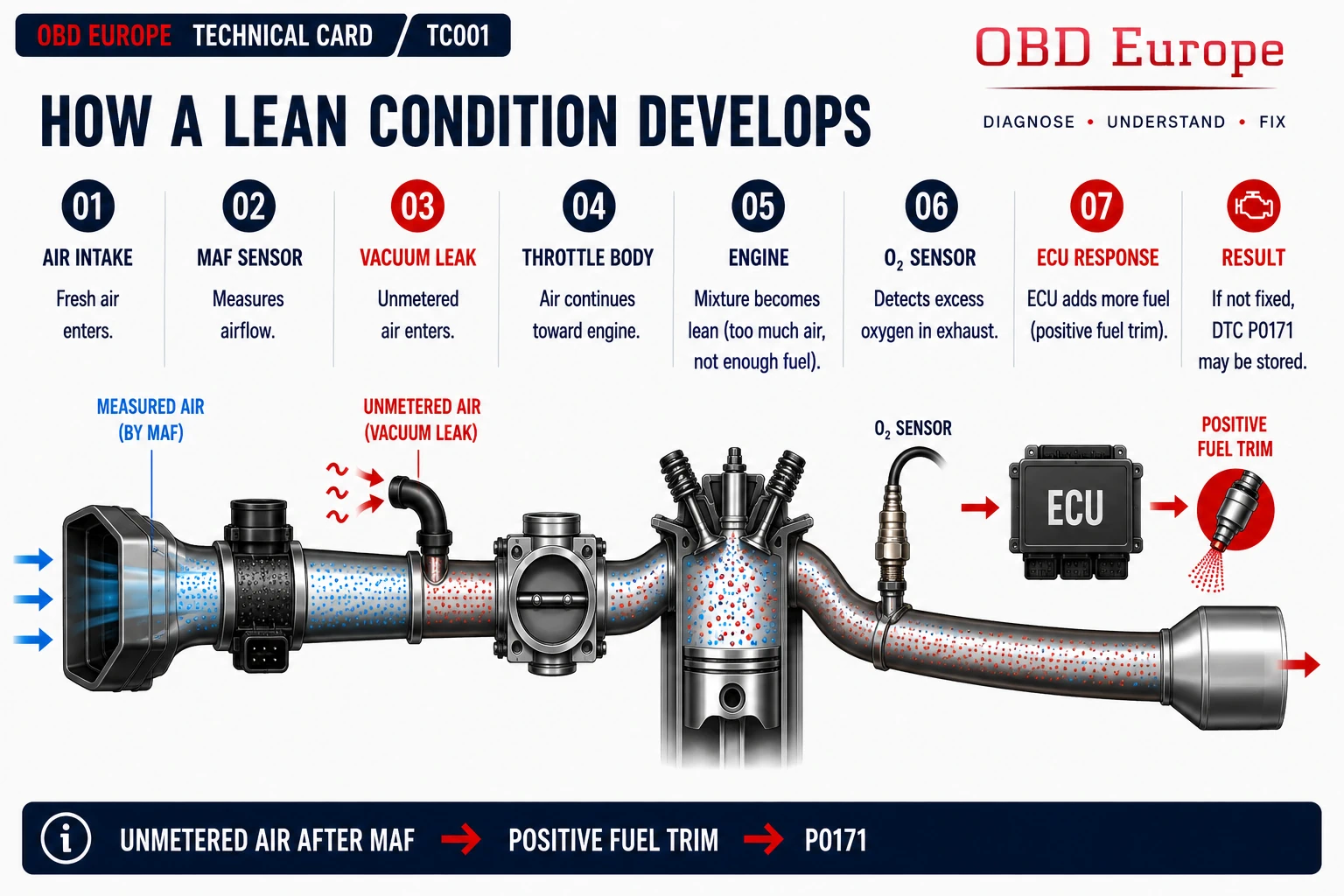
Step-by-Step Diagnosis
1. Scan for Lean Codes
Use an OBD2 scanner to check for lean mixture codes such as P0171, P0174, P2195 or P2197. Note whether the lean condition affects one bank or both banks, as this can help narrow down the cause.
2. Check Fuel Trim Data
Check Short-Term Fuel Trim (STFT) and Long-Term Fuel Trim (LTFT) in live data. Positive fuel trim means the ECU is adding fuel because it detects a lean mixture.
Compare fuel trims at idle and at approximately 2,500 rpm:
- High positive trims mainly at idle often point toward a vacuum or intake leak
- High positive trims at both idle and higher RPM can indicate fuel delivery, MAF or other air-measurement problems
- Lean correction on only one bank can point toward a bank-specific intake leak, injector issue or exhaust leak
- Lean correction on both banks suggests a problem affecting the engine as a whole
3. Inspect for Vacuum Leaks
Vacuum leaks are one of the most common causes of a lean condition, especially when fuel trims are significantly higher at idle. Check:
- PCV hoses
- Intake manifold gaskets
- Vacuum lines
- Brake booster hose
- Cracked plastic intake pipes
4. Check the MAF Sensor
A dirty or inaccurate MAF sensor can cause incorrect air-fuel calculations. Inspect the sensor and intake system for contamination, air leaks or damaged wiring. If cleaning is required, use only MAF-safe cleaner. Related codes may include P0101 and other MAF performance codes.
5. Fuel Pressure Test
Low fuel pressure can cause a lean mixture, particularly under load. Compare measured fuel pressure with the manufacturer specification. Possible causes include:
- Weak fuel pump
- Clogged fuel filter
- Failing fuel pressure regulator
6. Inspect Fuel Injectors
Restricted or malfunctioning injectors can cause a lean mixture on one or multiple cylinders. Look for:
- Misfires
- Rough idle
- Lean fuel trims affecting one bank more than the other
7. Check O2 Sensor Data
Use live data to verify that the oxygen sensors respond correctly to changes in the air-fuel mixture. Codes such as P2195 or P2197 indicate that the sensor signal is reporting a lean condition, but the sensor itself is not automatically the cause. Confirm the air-fuel mixture and wiring before replacing an O2 sensor.
8. Check for Exhaust Leaks
An exhaust leak before the upstream O2 sensor can allow outside air into the exhaust and create a false lean reading. Inspect the exhaust manifold, gaskets and nearby joints, and listen for ticking sounds when the engine is cold.
Relevant Fault Codes
What Scanner Do You Need to Diagnose a Lean Condition?
To diagnose a lean condition accurately, use an OBD2 scanner that can display live data such as Short-Term Fuel Trim, Long-Term Fuel Trim, MAF readings and oxygen sensor values. These readings help you determine whether the ECU is correcting for an air leak, fuel-delivery problem or incorrect sensor signal.
A basic code reader can identify lean-related fault codes, but live-data capability is much more useful when you need to find the actual cause.
Compare OBD2 Scanners →
When to Seek Professional Help
- Fuel trims above +20% at idle or under load
- Persistent lean codes after fixing vacuum leaks
- Low fuel pressure
- Misfires on multiple cylinders
- Exhaust leak near manifold