
Car Misfires – Causes, Diagnosis and How to Fix
If your car misfires, the issue is usually related to ignition components, fuel delivery, air‑fuel mixture or engine timing. This premium guide explains the most common causes and gives you a step‑by‑step diagnostic process to identify the problem accurately.
Symptoms of Engine Misfire
- Rough idle
- Jerking or hesitation when accelerating
- Loss of power
- Vibration at idle or under load
- Check Engine Light flashing or steady
- Increased fuel consumption
- Strong fuel smell from exhaust
Main Causes
- Worn or fouled spark plugs
- Failing ignition coil
- Clogged or leaking fuel injector
- Vacuum leak causing lean mixture
- Dirty or failing MAF sensor
- Low fuel pressure
- Faulty crankshaft or camshaft position sensor
- Engine timing issues
How an Engine Misfire Is Detected
An engine misfire occurs when one or more cylinders fail to produce the expected combustion event. The ECU monitors crankshaft speed changes and can detect when a cylinder produces less torque than expected, allowing it to identify and store misfire-related fault codes.
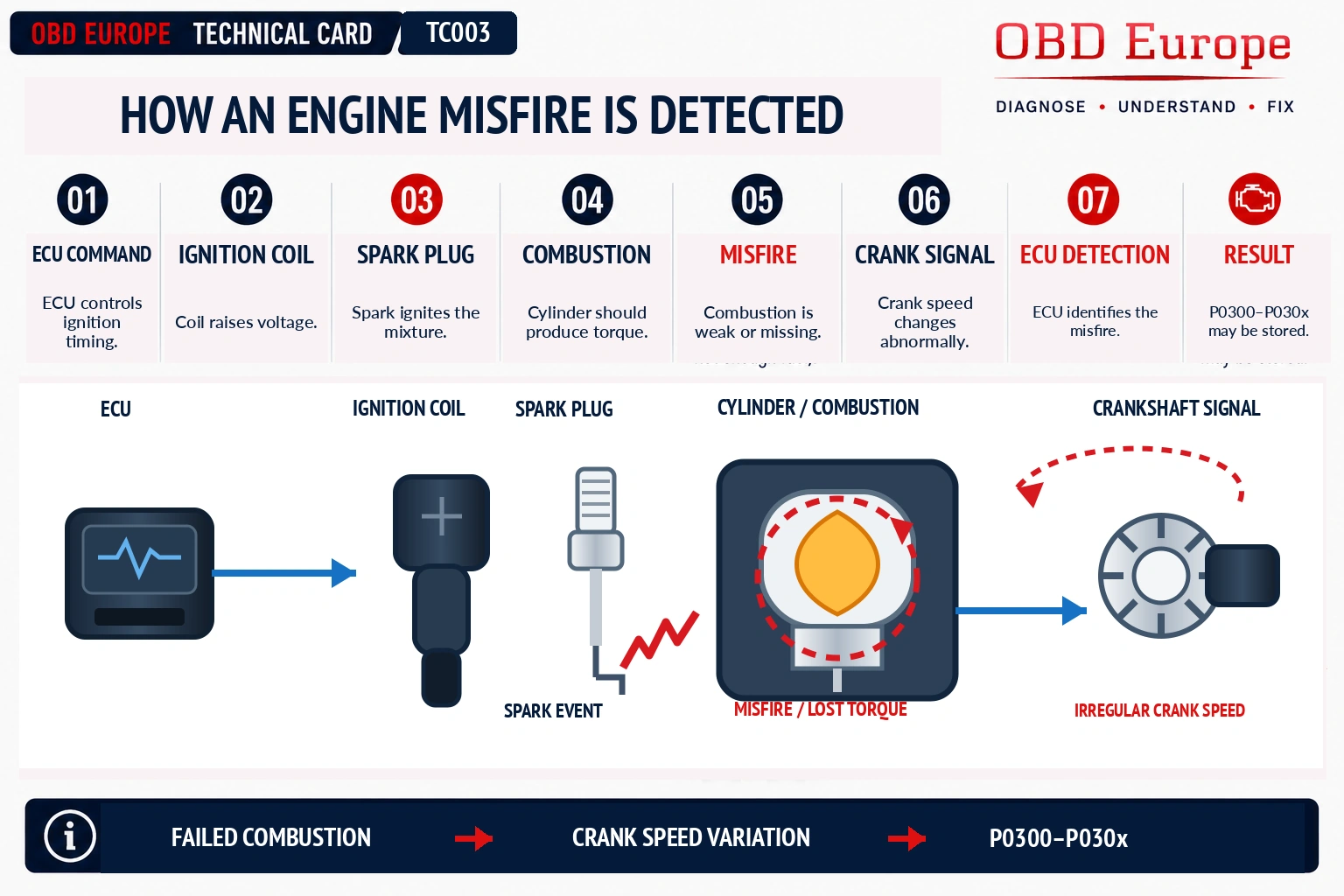
When diagnosing a misfire, first identify whether the fault affects one cylinder or several cylinders. Check ignition components, fuel delivery, injector operation and mechanical compression. Misfire codes such as P0300 or cylinder-specific P0301–P0308 can help narrow the diagnosis.
Step‑by‑Step Diagnosis
1. Scan for Misfire Codes
Use an OBD2 scanner to check for misfire codes (P0300–P0306). These codes tell you which cylinder is misfiring and whether the misfire is random or isolated.
2. Inspect Spark Plugs
Remove and inspect spark plugs. Look for:
- Oil fouling
- Carbon buildup
- Worn electrodes
- Incorrect gap
3. Test Ignition Coils
Swap the coil from the misfiring cylinder to another cylinder. If the misfire follows the coil, the coil is faulty.
4. Check Fuel Injectors
A clogged or leaking injector can cause a misfire. Symptoms include:
- Rough idle
- Fuel smell
- Lean mixture codes
5. Inspect for Vacuum Leaks
Vacuum leaks cause a lean mixture, which leads to misfires. Common leak points include:
- PCV hoses
- Intake manifold gaskets
- Vacuum lines
6. Check the MAF Sensor
A dirty or failing MAF sensor can cause incorrect air‑fuel mixture. Clean the sensor with MAF‑safe cleaner and check for codes such as P0101.
7. Fuel Pressure Test
Low fuel pressure can cause misfires under load. Compare measured pressure to manufacturer specifications.
8. Crankshaft/Camshaft Sensor Check
If the engine misfires intermittently or stalls, a failing crankshaft or camshaft position sensor may be the cause.
Relevant Fault Codes
- P0300 – Random/Multiple Misfire
- P0301–P0306 – Cylinder Misfire
- P0171 – System Too Lean
- P0101 – MAF Sensor Range/Performance
- P2195 – O2 Sensor Lean
Recommended OBD2 Scanner
To diagnose misfires accurately, you need an OBD2 scanner that can read misfire counters, fuel trims, injector pulse width and live sensor data. This helps identify whether the issue is ignition‑related, fuel‑related or caused by a lean mixture.
See our recommended tools and choose the right scanner for your vehicle:
When to Seek Professional Help
- Misfire codes return after replacing plugs/coils
- Fuel pressure is below specification
- Engine timing issues suspected
- Severe shaking or stalling
- Multiple cylinders misfiring simultaneously